№ 48
Baby Keepsakes: What Is Actually Worth Keeping
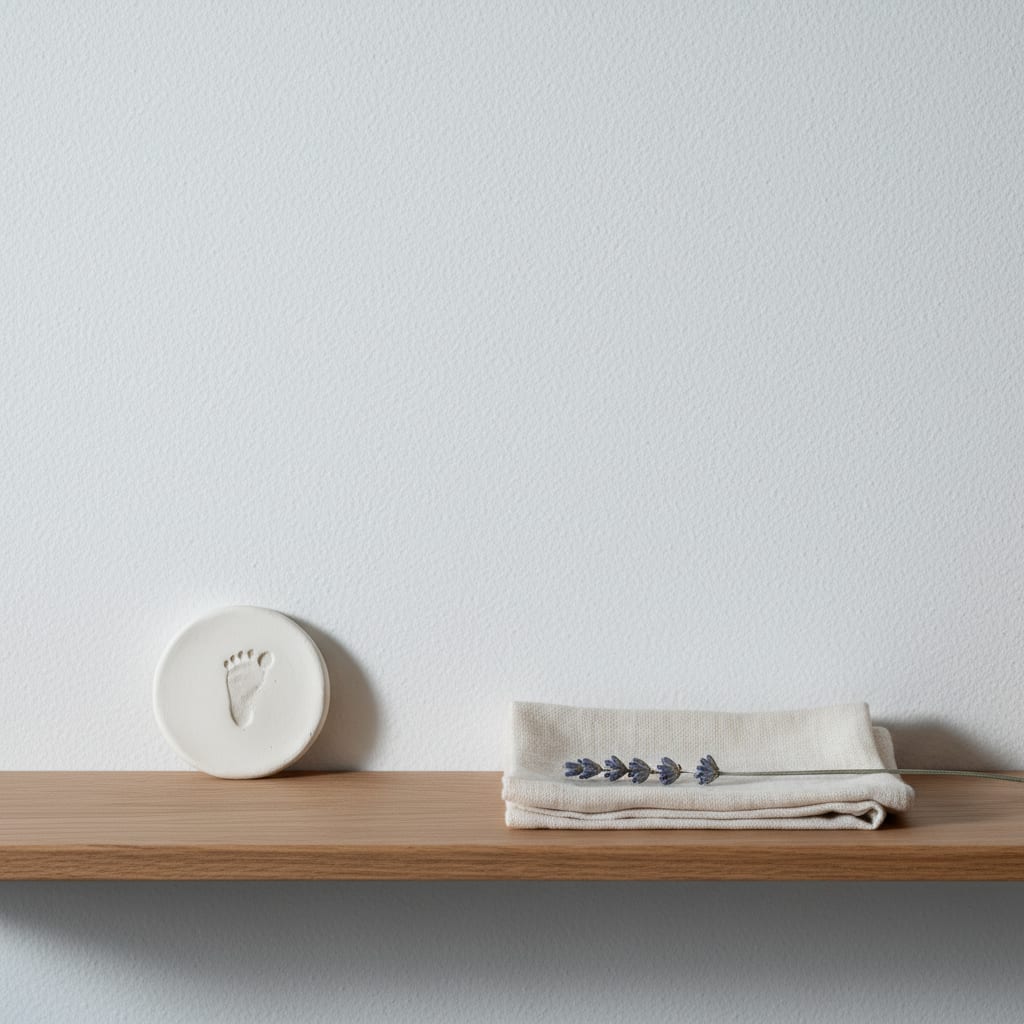
The baby keepsakes worth keeping are the small, specific things you can picture your child with: the hospital bracelet, one pair of first shoes, a few outfits, a lock of hair from the first haircut, a hand or footprint, and a letter you write to them. Everything else from the first year can be photographed and let go. The rule that holds it together is a cap rather than a list: one box per child, for the whole of childhood, and the first year gets no more than a third of it. When the box is full, something comes out before anything goes in.
Why the first year needs a cap
The first year produces more sentimental objects than any other, and almost none of them feel optional at the time. Every outfit was worn in a photo, and every card came from someone who loves you. Without a number, the keepsake pile grows at the same rate as everything else in the house that year, which is fast.
A cap turns the question from “should I keep this?” into “is this one of the best things in the box?” The first question has no bottom. The second one does. A box also sets a third aside on purpose, because a three-year-old’s first painting and a ten-year-old’s last school report will want room later, and the baby year is the one most likely to take it all.
The short keep list
Pick from these. You don’t need all of them, and most families won’t want every one.
- The hospital bracelet, or bracelets if there were two. Small, flat and irreplaceable.
- A few outfits. The coming-home outfit, the one in every photo that summer, the cardigan a grandparent knitted. Our garment number and the rule for choosing are in the keepsake section of the outgrown-clothes post, and those garments live in this same box.
- One pair of first shoes. One pair, not every size.
- A lock of hair from the first haircut, sealed in a small envelope with the date written on it.
- One hand or footprint, on paper or in clay. If two relatives each made one, keep the better one and photograph the other.
- The birth announcement and one or two cards that say something, not every card that arrived.
- A letter to them. Written in the first year, while you still remember what the nights were like. It costs nothing, and it may be the thing they’re gladdest to find later.
- The retired comfort object, if there was one and it has truly been given up. The other retired plush has a different exit, covered in how many stuffed animals a kid needs.
That’s around a dozen things, which fits comfortably in a third of one box.
Photograph, then let go
Plenty of baby things matter and still don’t belong in the box. The answer for those is a photograph, taken well, and then a donation, a hand-on or the recycling.
- Every other outfit. Photograph the child wearing it, not the garment on a hanger. The memory is the child.
- Cards and wrapping from the baby shower. Photograph them laid out together on the floor, then recycle them.
- Large toys and nursery decor. A mobile, a play gym, a wall hanging. Take one photo of the room as it was. The things themselves can go to the next family.
- Baby gear. The stroller, the bouncer, the high chair are tools rather than keepsakes, and they have their own exit, covered in when to get rid of the stroller.
- Duplicates. Two footprint casts, three newborn hats, a second baby book. Keep the best one.
Later artwork and school papers need their own system, because they arrive weekly. Retro Modern Mom has a good one in the school-paper keep, toss and treasure system.
The box, and where it lives
The box is the cap, so choose it once and choose it well. A plain acid-free record box like the Lineco 12 x 15 x 10 inch storage box holds a childhood’s worth of small things with the lid on, and it’s a clear limit. One per child, with their name on the end.
Where it lives matters as much as what’s in it. The National Archives’ guidance on storing family papers and photographs is written for exactly this kind of collection, and three points from it apply directly:
- Keep the temperature “below 75 degrees Fahrenheit” and the relative humidity “below 65% to prevent mold growth and reduce insect activity.”
- “Store items out of damp basements, garages, and hot attics,” and on a shelf rather than the floor.
- Use containers big enough for items “to lay flat or upright without folding or bending,” and “Don’t overstuff the box.”
So the box goes in a bedroom wardrobe or a hall cupboard, not the loft. That also keeps the cap working. A box you can see stays at one box. A box in the attic quietly becomes three, because nothing you can’t see ever gets edited.
When the box gets full
It will, somewhere around the school years. Take everything out once a year, on a quiet afternoon, and put it back in order of how much it matters. Whatever ends up at the bottom is the first to go when something new needs room. The baby things almost always stay near the top. That’s the point of choosing so few of them.
FAQ: baby keepsakes
What baby items should I keep for my child? A short list: the hospital bracelet, a few outfits, one pair of first shoes, a lock of hair, one hand or footprint, the birth announcement and a letter you write to them. Photograph the rest.
How many baby clothes should I keep? A small fixed number, chosen for the memory rather than the price. Five is the house number here, and it lives in the same box as everything else.
What do you do with baby keepsakes you don’t keep? Photograph them well, then donate, pass them on or recycle them. Cards and shower wrapping can be photographed together in one picture.
Where should I store a baby keepsake box? Somewhere cool, dry and inside the living space: a wardrobe shelf or a hall cupboard. The National Archives advises against damp basements, garages and hot attics.
Is a baby memory book worth it? Only if you’ll fill it. A half-finished book is one more object to feel guilty about. A letter written once a year does the same job and takes ten minutes.