№ 06
Kids' Capsule Wardrobe: How Many Clothes They Need
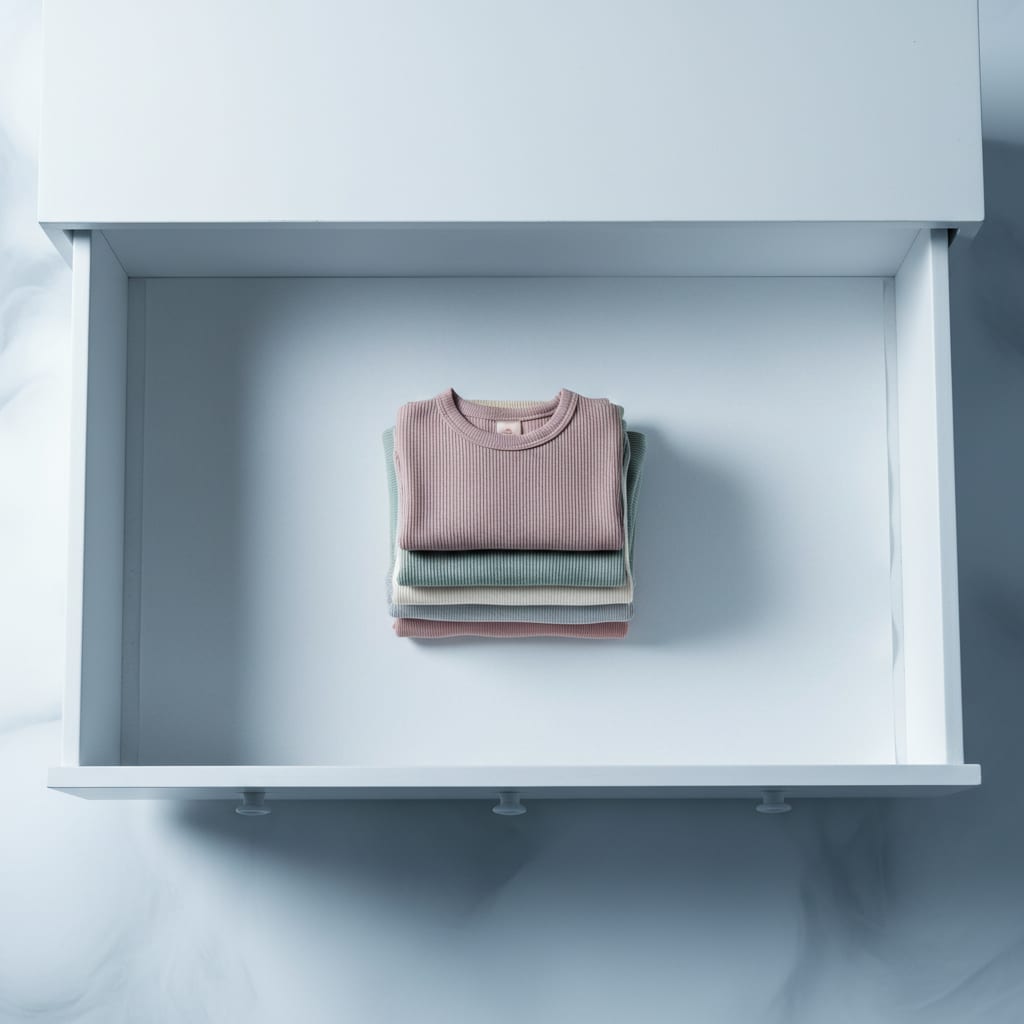
A kids’ capsule wardrobe answers one question with numbers: how many clothes does a child actually need? For most kids past the toddler stage, a season runs comfortably on about 20 to 25 pieces: roughly 7 tops, 5 bottoms, 2 layers, 1 coat, 1–2 dress-up outfits, 2 pairs of pajamas, 2–3 pairs of shoes, and a week-plus of socks and underwear. That’s a wardrobe that fits in two drawers and a handful of hangers, covers a full laundry cycle with margin, and — the part parents feel first — ends the morning excavation, because every drawer closes and everything in it fits, right now, in this season.
The counts, by category
| Category | Working count | Notes |
|---|---|---|
| Tops | about 7 | mix of short/long sleeve for the season |
| Bottoms | about 5 | all of them friends with all the tops |
| Layers | 2 | one zip hoodie or cardigan, one warmer |
| Coat | 1 per season type | the one good one |
| Nicer outfit | 1–2 | weddings, photos, grandparents’ table |
| Pajamas | 2 | in rotation with laundry |
| Shoes | 2–3 pairs | everyday, weather, dress if needed |
| Socks & underwear | 8–10 each | the one category to overshoot slightly |
Calibrate to your reality, not to the chart: laundry every four days can run leaner; a daycare kid who paints daily needs an extra top or two; potty training suspends all bottoms math. The counts aren’t doctrine — they’re a default no that makes every addition justify itself. (Sound familiar? It’s the toy-shelf logic applied to drawers.)
Two structural rules do more than any count. Everything matches everything: buy inside one loose color family per kid and any drawer-grab produces an outfit — solids and simple patterns, no shirts that only work with one specific pant. One season lives in the drawers: off-season and next-size clothes are the biggest closet-crowders in most kids’ rooms, and they don’t pay rent — box them, label them, get them out of the daily furniture.
The toddler capsule wardrobe (ages 1 to 3)
A toddler capsule wardrobe runs on the same structure with different numbers. Toddlers get through more clothes in a day and grow out of them faster, so the counts tilt heavier on tops and lighter on anything that has to fit well.
| Category | Toddler count | Why it differs |
|---|---|---|
| Tops | 8–10 | food, paint and the floor, often before lunch |
| Bottoms | 5–6 | soft waistbands only; potty training suspends this row |
| Layers | 2 | the same as for a big kid |
| Coat | 1 | buy roomy, because it has to last the season |
| Nicer outfit | 1 | they will outgrow it before a second wedding |
| Pajamas | 3 | one extra for the leaky nights |
| Shoes | 1–2 pairs | feet change size too fast for a third pair to earn its place |
| Socks | 8–10 | the same rule as above: overshoot slightly |
That is roughly 20 to 25 pieces again. The extra tops are paid for by fewer shoes and only one good outfit. Two habits make the toddler version hold. Check the fit every month or so, because a toddler drawer fills with clothes that fit in spring and don’t now. Size up in one move, not piece by piece. When half the tops are tight, swap the whole drawer for the next size at once from the next-size box. Buying replacements one at a time is how a toddler drawer ends up holding two sizes and three seasons.
Why kids’ drawers overfill (a buyer’s confession)
In my retail years, kids’ clothing was the most cheerfully overbought department we had, and the reasons were structural. It’s cheap enough that each purchase feels free. It arrives as gifts on every occasion. It comes in hand-me-down bags by the ten-pound lot. And kids change sizes fast enough that nobody ever feels finished, so the buying reflex never gets to rest. The result in most homes: drawers at 200% capacity where a fifth of the contents does all the work. Your kid already has a capsule wardrobe — the same beloved eight outfits on repeat. The other forty pieces are storage with extra steps.
That’s why a kids’ capsule succeeds or fails on inflow, not folding. The counts above handle what stays; these three rules handle what arrives:
- Gifts: when relatives ask, answer with a specific gap — “she’s short on long-sleeve tops, size 6” — one useful piece beats four adorable redundancies.
- Hand-me-down bags: accept graciously, sort ruthlessly the same day, keep only what fills a hole in the chart, and pass the rest along without guilt. An unsorted bag in the closet is a debt, not a gift.
- Your own shopping: replace, don’t add. The wardrobe is full by design, so the trigger for buying is a hole — outgrown, worn out — not a sale. One-in-one-out, drawer edition.
Fewer, better: where the money goes
A 20-piece wardrobe changes the buying math in a way I wish I could have printed on our price tags: divide cost by wears, not by sticker. Twenty pieces worn constantly justify better construction exactly where kids destroy clothes — knees, elbows, sock heels, shoe toes — and quality basics survive to hand down to the next kid, which halves their real cost again. The full family version of that argument is buy less, buy right, and the specific hall-of-famers (including the socks that outlast the child) are in buy it once: family things worth the money.
Ready to build one? The working version of this post — exact counts by season with summer and winter swaps, in checkbox form — is the kids’ capsule wardrobe checklist.
FAQ: kids’ capsule wardrobes
How many clothes does a child need in total?
Around 20 to 25 in-season pieces plus socks and underwear covers most kids past toddlerhood — enough for a laundry cycle with a sick-day buffer. The better test than any total: every drawer closes easily, and nothing in it is the wrong size or season.
How many outfits does a toddler need compared to a big kid?
Run toddlers a few tops heavier and a pair of shoes lighter, and expect to size up mid-season. The structure holds from about eighteen months; the full toddler table is in the toddler capsule wardrobe section above. It’s the counts that shift with age, not the system.
What do I do with hand-me-downs and next-size clothes?
One labeled box per next size, filled only with pieces that would earn a slot in the chart — not everything that arrives. Sort incoming bags the day they land, and let the box’s lid be the cap. A kid needs a wardrobe, not an archive; the archive is where drawers go to die.
Isn’t a capsule wardrobe just for adults with work clothes?
The adult version is a style system; the kid version is an inventory system — different goals, same math. (Mom’s own capsule is genuinely a different subject, with seasons and silhouettes and a body that stays one size; the style blogs cover it properly.) For kids, it’s simpler: right count, everything matches, drawers close, mornings end.