№ 02
Buy Less, Buy Right: The Fewer-Better-Things Method
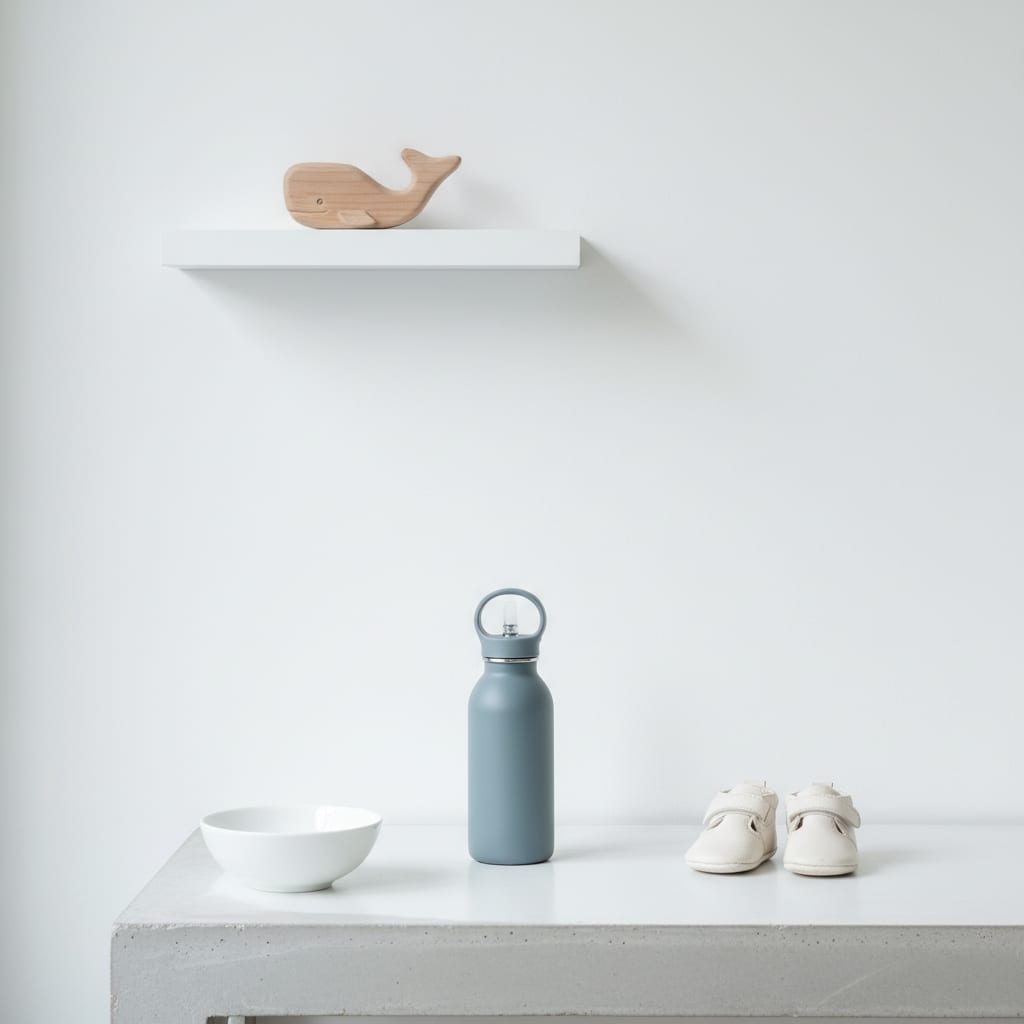
Buy less, buy right is the whole purchasing philosophy of this site in five words: own fewer things, and let that make each purchase more considered, not less. The method in practice: every category in family life gets at most one excellent answer — one wagon, one everyday sneaker, one set of magnetic tiles — chosen carefully, bought once, used hard. Owning less doesn’t mean refusing to buy; it means every purchase now occupies scarce shelf space, so it has to earn the slot. Minimalism isn’t the opposite of buying things. It’s the opposite of buying things carelessly.
The one-slot rule
Here’s the mental model, imported directly from my old job. A retail buyer doesn’t ask “is this product nice?” — everything at the vendor show is nice. A buyer has a fixed number of open-to-buy slots and asks: is this the one answer to its category? One slot for kids’ rain boots. One for the water bottle. Fill a slot, and the category is closed until the item dies.
Run your household the same way and the noise stops. You never comparison-shop a closed category. You never own four mediocre versions of one need — four cheap umbrellas is the expensive way to stay dry. And when something new tempts you, the question isn’t the fuzzy “do we need this?” (askable forever) but the concrete “which slot is open?” — which usually answers itself. It’s the one-in, one-out rule applied upstream: that rule guards the door; this one retires the shopping trip before it starts.
The four questions that close a purchase
When a slot is open, buy like a buyer — slowly, once. Four questions settle nearly everything:
- Does it earn a slot? Name the real, recurring need. “The old one broke” qualifies. “It was 40% off” is not a need; a discount on something you don’t need is just a smaller waste.
- Is this the canonical one? Most categories have a known right answer — the product everyone who researched it landed on. Find it, buy it, stop. (When this site recommends, that’s what you get: the one worked example per category, never a fifteen-item roundup.)
- What’s the cost per use? Divide price by honest years of service. The good wagon beats the cheap one by year two; the quality kids’ coat that hands down to a sibling halves its price retroactively. Cheap-per-sticker and cheap-per-use are usually different products.
- Wait — still wanted? For anything non-urgent, a 30-day list. In my experience about half of wants quietly die on the list, which is the highest return on investment in this entire method.
Where quality money actually goes
Buy-right does not mean buy-expensive-everything — premium pricing is often story, not construction (ask me how I know). The money goes where use is hard and daily: things kids wear on their bodies and drag across the world. The specific family hall-of-famers — the socks with a lifetime warranty, the backpack that outlasts a diploma, the wagon that serves a decade — get their own worked-example list in buy it once: 10 family things worth the money. Where use is light or a size lasts one season, mid-range and hand-me-down are the right call; the kids’ capsule wardrobe counts are what make even that cheap tier feel abundant, because twenty right pieces beat sixty random ones at any price point.
The same logic runs the toy shelf — twelve slots, one canonical pick each, in the minimalist toy shelf — and it’s why this site names specific products at all. Skepticism about stuff, expressed honestly, isn’t refusing to recommend; it’s recommending once and standing behind it. A house that buys less needs its few purchases to be right.
The quiet payoffs
Families adopt buy-less-buy-right for the money and stay for the calm. Decisions collapse: closed categories are closed, and shopping stops being a background process. Objects get promoted: the one wagon is the wagon, named, defended, maintained — kids treat the singular better than the plural, reliably. Gifts get easy: relatives who ask get a specific, wanted answer instead of a guess. And the house stops accumulating, not because anyone is white-knuckling restraint, but because the arithmetic no longer allows drift. That’s the trade in one line: fewer decisions, better stuff, quieter house — the whole minimalist starting point, expressed as a receipt.
FAQ: buy less, buy right
Isn’t “buy right” just an excuse to buy premium things?
No — it’s a discipline about count first and quality second. The method frequently lands on the mid-range workhorse or the used version of the good thing; what it never lands on is four of anything. If a premium price buys warranty, materials and years, it earns the slot; if it buys a logo, it doesn’t.
How do I find “the canonical one” in a category?
Look for the convergence point: the product that repair-minded forums, longtime owners and skeptical reviewers all land on independently — it’s usually boring-looking and rarely the best-marketed. One good test from the trade: the canonical product’s owners describe it in years (“still going after six”), not features.
What about kids’ stuff they outgrow in a year?
Outgrowables flip the math toward durable-but-secondhand: quality construction still wins, but let someone else pay the new-price premium, and hand it down when you’re done. The exception is anything used daily and hard — shoes, coat, backpack — where buying the good one new usually survives to kid number two anyway.
Doesn’t a 30-day wait list kill all the fun of buying?
It kills the fun of impulse, which is cheaper than it feels. What survives the list gets bought with full enthusiasm and zero morning-after — and kids who watch wants season on a list learn the household’s actual superpower: wanting something next month is allowed.