№ 22
Hand-Me-Downs: What to Accept, What to Pass On
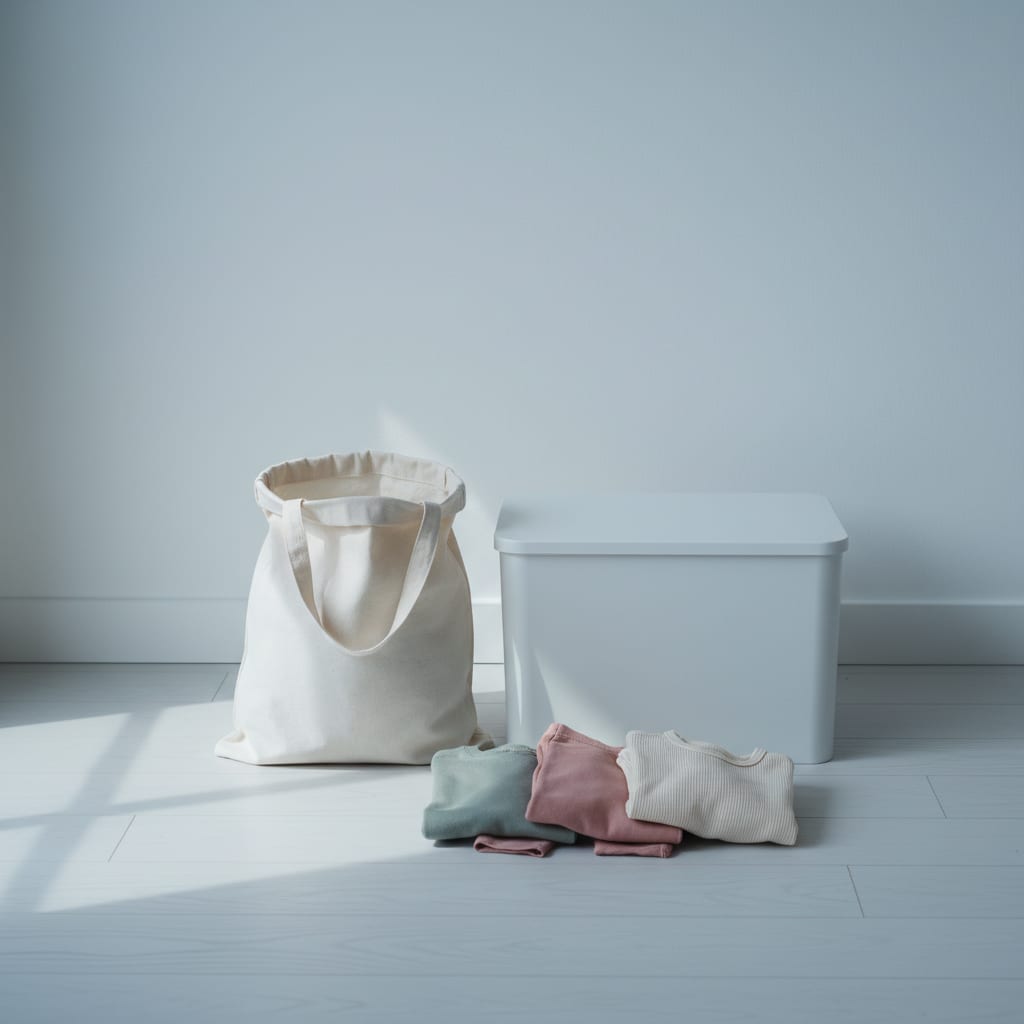
Accept hand-me-downs the way you’d accept anything else: against a number you already decided. The rule that works is a three-step sort done before the bag comes into the house — keep only what fits the current season and the current size, cap what you store ahead at one bin per child, and pass the rest on the same week without apology. Free clothes are only free if they arrive at a count you’d have chosen anyway; a bag you didn’t sort is a purchase you didn’t make and still have to store.
The bag is an inflow, not a gift
The reason hand-me-downs quietly wreck a right-sized wardrobe is that they don’t feel like acquisition. Nobody spent money, nobody chose anything, and there’s usually a friendship attached. So the bag skips every filter you’ve built.
But a drawer doesn’t know where a shirt came from. Eleven free long-sleeved tops in size 5 fill exactly as much space as eleven bought ones, and they’re harder to remove, because now there’s a person attached to each of them. Treat the bag as what it structurally is — an arrival — and it becomes manageable. If you haven’t set the counts yet, how many clothes kids actually need has the working numbers; everything below assumes you have a number to sort against.
Sort before it crosses the threshold
Do this in the entryway, the garage, or the trunk. Not in the bedroom, and not “later this week” — later-this-week is how a bag becomes furniture.
Round one: does it fit now, this season? If yes and you’re under your count, it’s in. If you’re at your count, it competes: does this shirt beat one you own? Sometimes it does, and the loser leaves. That’s the whole trade.
Round two: is it the next size up, in a shape you’d have bought? One bin. One, per child, in the closet, with a lid. The bin is the cap — when the bin is full, the answer to future size-ahead items is a genuine no. This one rule does more work than any other on the list.
Round three: everything else leaves this week. Not to the garage. To the next family, a donation bin, or wherever the bag was going to go anyway. Storing someone else’s overflow on their behalf is a favour nobody asked for.
The physical mechanics of where the bin lives and how the closet is set up are Retro Modern Mom’s territory, and her kids’ closet organization guide is the practical one. Our side of the line is the count, not the container.
What to say no to, kindly
Declining is the part people find hardest, so here is what actually gets declined in our house — and the sentence that goes with it.
Anything three or more sizes ahead. By the time a size 7 fits a three-year-old, you’ll have moved, the season will be wrong, and the elastic will be tired. “We only store one size up — but I’ll take anything in 4 gladly.”
Formalwear and occasion pieces. The tiny blazer, the sequin dress, the sailor outfit. Worn once by the previous child, worn zero times by yours, and it occupies a hanger for two years. Decline these specifically: “We’re pretty much a jeans house — save those for someone who’ll get the use.”
Anything stained, pilled, or stretched. The other family already decided this item was finished; the bag is just a slower route to the same conclusion. You are allowed to skip the step where it lives in your drawer first.
Character clothing your kid hasn’t asked for. This one’s practical, not aesthetic — a licensed shirt has a shorter social lifespan than a plain one and can’t be handed on again as easily.
Shoes, almost always. Worn shoes hold the previous child’s wear pattern. A well-loved pair of boots for the garden, fine. Everyday shoes, no.
The universal script, warm and short: “Yes to the 4s — I’ll take those happily. We’re full on everything else, so please don’t hold anything back for us.” The second sentence is the one that matters. Without it you get a bag every six weeks forever, because you were polite once.
The two things worth buying new
Hand-me-downs cover most of a wardrobe well. Two categories don’t hand down, and pretending otherwise costs more than buying properly.
Socks and underwear. These arrive worn out by definition. This is a small category where buy-it-once genuinely applies: Darn Tough kids’ micro crew socks carry the brand’s replacement guarantee, so a hole means a new pair rather than a new purchase — which makes six good pairs a smaller lifetime cost than the endless bag of thin ones. Buy few, buy the guaranteed ones, keep them all the same colour so the sock drawer stops being a matching exercise.
Everyday shoes. The one item that should be fitted to the foot wearing it. Buy one pair at a time, replace when outgrown rather than when tired of.
Everything else — jeans, tops, coats, snow gear, pyjamas — hands down beautifully, and a coat that’s had one careful owner is a better object than a new cheap one. That’s the whole buy-less-buy-right position applied to secondhand: fewer, better things doesn’t mean fewer, newer things. One Mom’s Guide makes the broader case for buying secondhand first if you want the money side of it.
Passing on: do it fast and do it plainly
When you’re the outgoing family, the kindest version has three properties. Sort it first — never pass on a bag containing things you wouldn’t accept. Say the size and the season out loud: “Two bags, size 4, autumn and winter, all wearable.” And release it completely: “Keep what works, donate the rest, don’t tell me which.” That last line is a gift in itself. It’s what frees the receiving family to run their own sort without guilt, which is the only way any of this stays sustainable between friends.
Do not, under any circumstances, ask for photos of your old clothes on the new kid. I say this with love. It converts a gift into an obligation, and it’s the reason some families quietly stop accepting bags.
The seasonal checkpoint
Twice a year — when the clocks change is as good a trigger as any — pull the size-ahead bin, promote what fits, and re-sort. Twenty minutes. Anything in the bin that’s now too small and never got worn goes straight out, and you note the size so you can decline that gap next time.
The autumn version of this is worth doing deliberately, because it’s the one that determines whether September mornings are calm: the back-to-school capsule covers what actually needs to be in rotation, and the printable capsule checklist is the count to sort against.
FAQ: hand-me-down clothes rules
How do I say no without offending a friend?
Say yes to something specific and no to volume in the same breath: “I’d love the 4s — we’re completely full on everything else.” People rarely take offence at a boundary that comes with a genuine yes attached. The offence usually comes from the alternative — accepting everything, storing none of it, and being caught with the bag in the donation pile.
Should I keep hand-me-downs for a future baby?
One bin per child, and only if you’re genuinely expecting to need it. Baby and toddler clothes stored for more than a couple of years tend to come out yellowed at the neckline, elastic gone, and in a season that doesn’t match the new baby’s birthday. Storing four bins on a maybe costs real square footage for years.
What about hand-me-downs my kid refuses to wear?
Let them lose. A shirt worn under protest is worn twice; a shirt chosen is worn to death. From about four, kids can do the sort with you — three yeses and three noes out of a bag is a fair ratio, and their noes are usually about fit and feel rather than style.
Is it rude to donate what I was given?
No, provided you were given it outright rather than lent it. The only thing that makes it awkward is secrecy, which is why “keep what works, donate the rest” is worth saying when you’re the one passing on. If someone’s genuinely lending — a snowsuit for one winter, say — that’s a different arrangement and needs to be named as one at handover.