№ 07
Kids' Capsule Wardrobe Checklist (Free Printable)
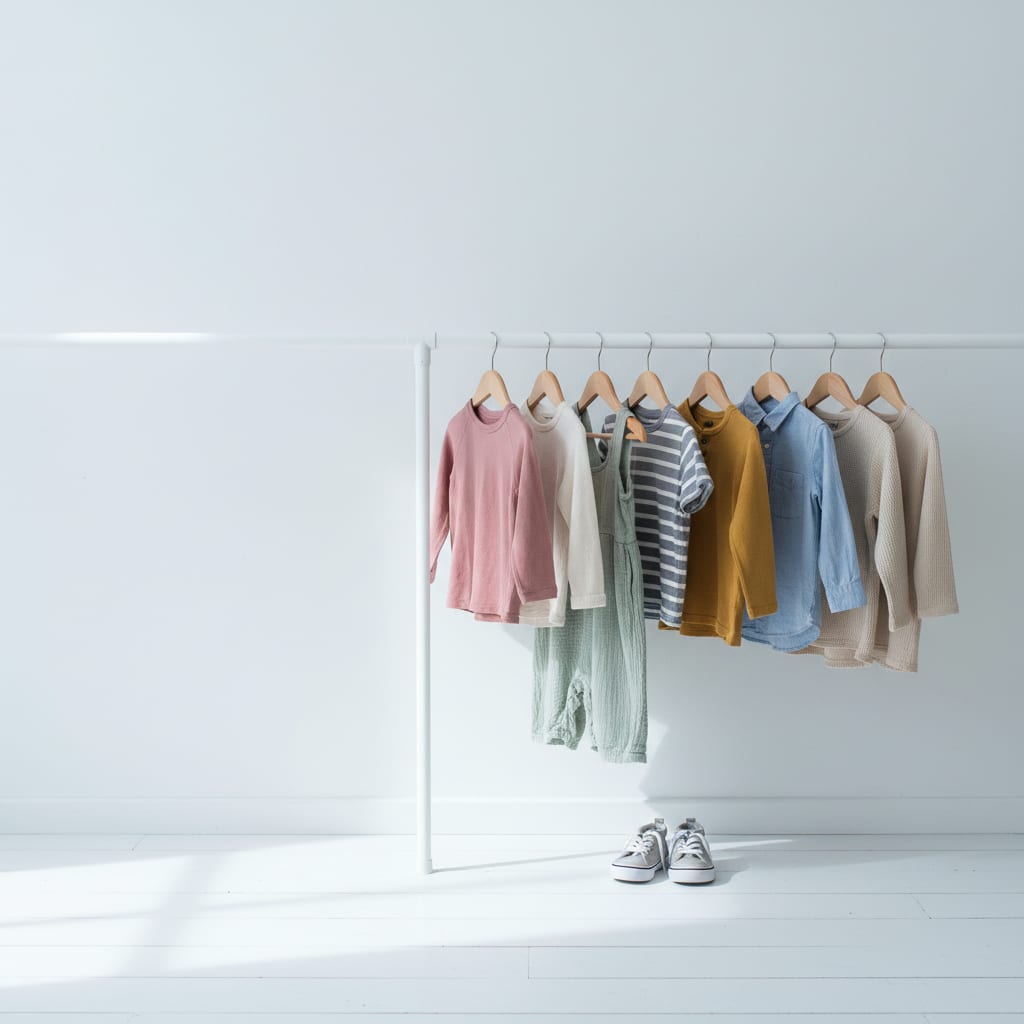
A kids’ capsule wardrobe checklist turns “they have too many clothes” into a fifteen-minute audit: print the list below, tape it inside the closet door, and check off what your kid already owns in the current size and season. Everything checked stays. Everything unchecked is a genuine gap — your entire shopping list. Everything left over, beyond the counts, is the excess that’s been jamming the drawers. One page replaces the whole debate, which is precisely the point of running a wardrobe by checklist instead of by mood: the list decides, not the sale rack.
The master checklist (any season)
Everyday core
- 7 tops, season-appropriate, all matching the kid’s color family
- 5 bottoms, all of them compatible with all the tops
- 2 layers — one light (zip hoodie or cardigan), one warm
- 1 coat for the season’s actual weather
- 2 pairs of pajamas
- 8–10 pairs of socks (identical ones — pairing is a chore you can delete)
- 8–10 underwear
Occasional
- 1–2 nicer outfits (weddings, photos, the grandparents’ table)
- 1 swimsuit
- Sun hat or warm hat, per season
Feet
- 1 pair everyday sneakers
- 1 pair weather shoes (rain boots or winter boots)
- 1 pair sandals or dress shoes, per season and per your actual life
That’s roughly 20 to 25 garments plus socks and underwear — the counts argued for properly in the kids’ capsule wardrobe guide. Print one list per kid; the checklist is per-child, not per-household.
Seasonal swaps: two short lists, twice a year
The capsule stays one-page because only the variables change at the season turn. At the swap (spring and fall, the same weekend you flip your own closet):
Summer version: tops go short-sleeve heavy (keep 2 long for cool evenings), add the swimsuit and sun hat to active duty, sandals replace boots, the warm layer goes to the box.
Winter version: tops go long-sleeve heavy (keep 2 short for layering), add hat-gloves-scarf as one checklist line, boots replace sandals, and the coat line means a real coat.
Everything coming out of the drawers goes to exactly one of three places: the next-size box (if it’ll fit the same kid next year), the hand-me-down bag (out of the house within the week), or the rag bin. No fourth pile. The swap takes under an hour per kid once the counts are real, and it’s the natural moment to re-run the checklist and rebuild the gap list before back-to-school or holiday sales tempt you into buying sideways.
How to use the gap list without refilling the drawers
The checklist’s unchecked boxes are a shopping list with a built-in stop: when the box is checked, that category is closed. Three rules keep it honest. Buy for the gap, not the sale — a fourth hoodie at 60% off is still a fourth hoodie against a two-hoodie line. Replace at end-of-life, not at novelty — the trigger is outgrown or worn out, never “saw a cuter one.” And when relatives ask what a kid needs, read them the unchecked boxes verbatim; specific answers convert gift generosity from drawer-cloggers into exactly the right long-sleeve top. (This is the drawer edition of the same inflow discipline behind the one-in, one-out toy rule — arithmetic at the door.)
Because a capsule concentrates wear onto few pieces, the checklist pairs naturally with buying those pieces once and well — knees, heels and toes take the whole season’s load. Where the durability money actually pays off (the socks with a lifetime warranty, the backpack that graduates college) is covered in buy it once: family things worth the money.
FAQ: the capsule checklist
How do I know what size to buy for the next season?
Check the tag your kid wears now, and buy the swap season one size up if they’re within a few months of a birthday — kids’ sizing runs roughly annual. Buying two sizes ahead on deep sale is how next-size boxes become archives; one size of runway is plenty.
How often should I redo the checklist?
Twice a year at the seasonal swap, plus a five-minute pass after growth spurts and before gift season. The audit gets faster every time — by the second year it’s genuinely a fifteen-minute job, because the drawers start from the right count.
What about daycare and school extras?
Add a one-line school annex per your school’s rules — usually one full spare outfit in a labeled bag, plus outdoor gear that lives at school. Count those pieces as deployed, not part of the home capsule; they come back into the count at the season swap.
Can I run the checklist with my kid instead of on them?
From about age four, yes — and it’s worth it. Kids check boxes with alarming enthusiasm, learn what “enough” looks like in their own drawer, and defend counts they helped set. By seven or eight the seasonal swap can be genuinely theirs, with you on box-labeling duty.