№ 08
Minimalism With Kids: The Realistic Starting Point
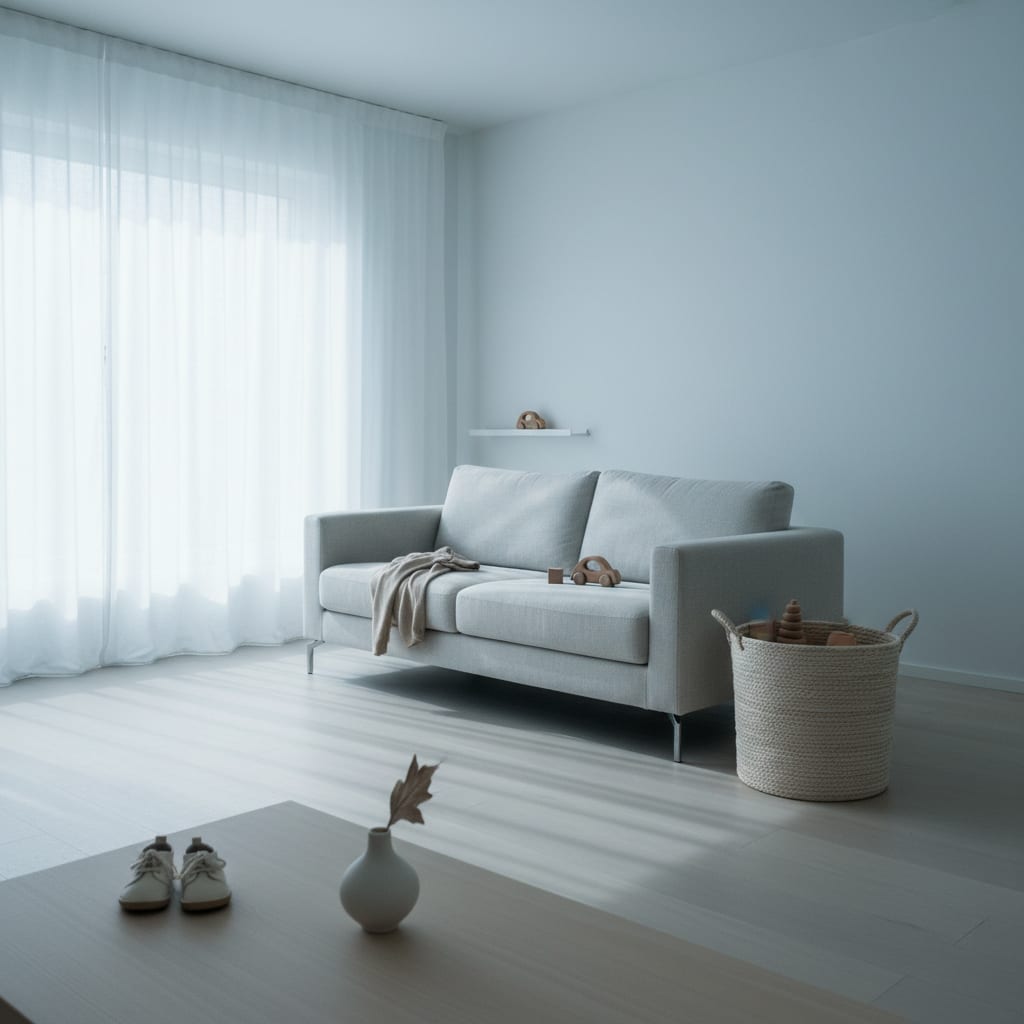
Minimalism with kids starts in one place, and it isn’t the playroom: it’s the inflow. Before you remove a single toy, slow down what’s arriving — the gifts, the freebies, the just-because purchases. Then set keep-counts for the big three categories (toys, clothes, books), edit down to them with your kids rather than around them, and hold the line with a simple one-in-one-out rule. That order — inflow first, counts second, clear-out last — is the realistic version. Most families do it backwards, purge a closet, and refill it by October.
Why the purge-first version fails
I spent years as a retail buyer for a big-box chain, which means I spent years studying how stuff gets into houses. Here is the trade secret: the household purge was never our problem. We knew you’d clear a shelf in January — and we knew the endcap, the birthday aisle, and the checkout display would refill it within the quarter, because nothing about the refill rate had changed.
A house with kids is a bathtub with the tap running. Bailing water without touching the tap is exercise, not progress. So the starting point is unglamorous: for one month, change nothing except what comes in. No new toys outside birthdays. A polite pause on hand-me-down bags. A “we’re all set, thank you” script for the grandparent care packages. You’ll be shocked how still the water gets.
Step two: set the counts before you cut
“Less” is not a number, and kids don’t negotiate with vibes. Counts turn a mood into a rule the whole family can see. Ours: a toy shelf that holds everything with air left over, drawers that close without pressing, one bookcase. Yours will differ, and the exact numbers matter less than having them — the shelf decides, not the mood of the day. If you want working numbers to start from, I keep them in how many toys does a child actually need and the kids’ capsule wardrobe counts.
One warning from the sales floor: don’t buy anything to start. Minimalism sold as a shopping trip — sixteen matching bins, a label maker, a “capsule starter set” — is just maximalism with better photography. You almost certainly own fewer containers than you need only if you keep everything, which is the thing we’re not doing.
Step three: the edit, with your kids in the room
Editing behind a child’s back is fast, and I understand the temptation, but it teaches them nothing and it costs you trust the first time they ask where the broken robot went. Kids from about age three can handle a version of the choice: “The shelf holds ten toys. Which ten earn their place?” You’ll be surprised — kids are often more ruthless than we are, because they aren’t sentimental about the money spent. That framing does the discipline for you: nobody is “throwing away your toys”; the shelf simply holds what it holds.
For the mechanics of the actual clear-out — what order to work a room, donate-versus-toss calls, keeping the discard pile out of small sightlines — use the room-by-room declutter checklist at Retro Modern Mom. That’s her lane and she runs it well; this site’s job is the counts and the philosophy, not the garbage bags.
Step four: cap the total, permanently
The edit is a one-time event; the cap is the system. Every new arrival displaces an old resident — one in, one out, no exceptions for December. The full mechanics (including how to run it without tears, and what to do with the out-pile) live in the one-in, one-out toy rule. This single rule is the difference between a tidy month and a different house.
What you’re actually buying with all this
Not an aesthetic. The Instagram version of minimalism — white walls, four wooden toys, a child gazing at a single tasteful rainbow — is a photography genre, not a family policy. A real minimalist house with kids looks ordinary: full shelves, closing drawers, a floor you can cross barefoot at night without injury. What changes is quieter and better: cleanup takes minutes because everything has a home with room to spare, kids play longer with less (there’s honest research on this — see why fewer toys mean better play), and you stop spending your evenings as the family’s unpaid stock clerk.
And to be clear about what this site will never ask of you: no judgment of the ninety-toy house — I helped build the ninety-toy house professionally, and some of my favorite people live happily in one. This is for the parents who suspect the toys have won and want a calm way to take the room back.
FAQ: starting minimalism with kids
Should I declutter before setting up systems?
Slow the inflow first, set your counts second, and clear out third. A purge without an inflow rule refills itself — usually within a season. The order feels slower and is actually faster, because you only do the big edit once.
Will my kids resent having fewer toys?
In my house and most I’ve heard from: a rocky first week, then not at all. Kids resent losing things arbitrarily; they adapt quickly to a clear rule like “the shelf holds ten.” Involving them in choosing what stays is what makes the difference — the rule reads as fair instead of imposed.
What if my partner isn’t on board?
Start with only your own domains — your closet, the kitchen counter you manage, shared spaces you already run. Visible calm is more persuasive than any argument. Most reluctant partners join once one room demonstrably feels better; nobody joins because they lost a debate.
How long does it take a family to get to “minimal enough”?
Give the inflow month its month, then expect a season of editing at a sustainable pace — one category or one room per weekend, not a scorched-earth holiday. The cap does the rest permanently. This is a thermostat you’re setting, not a race you finish.