№ 45
Drowsy but Awake: What It Means and When It Works
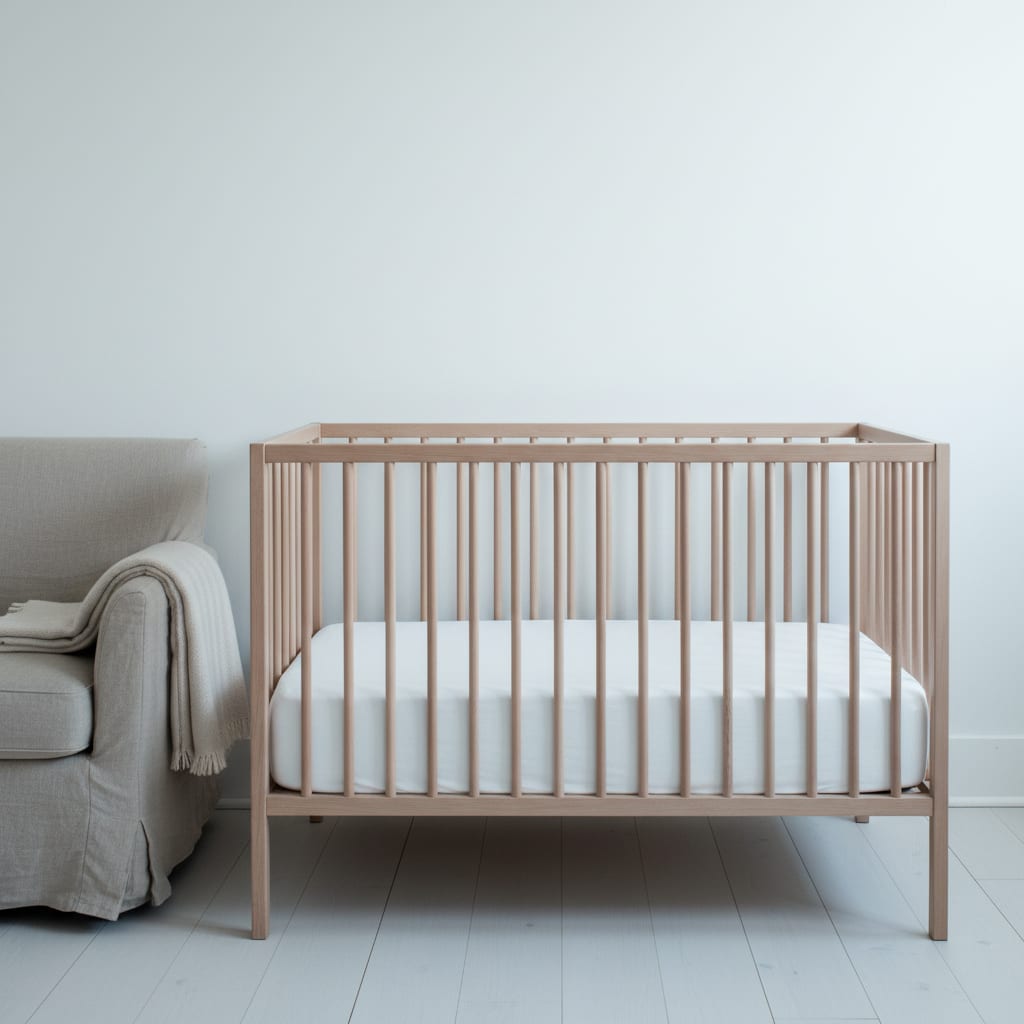
Drowsy but awake means putting a baby into the crib sleepy but still conscious, so the last thing they notice before sleep is the mattress rather than your arms. The American Academy of Pediatrics gives it as advice for babies four months and older. In the first weeks it rarely works and isn’t meant to. From about two months it is worth a gentle try, and from four to six months it tends to take. If your baby wakes fully on the way down, do the smallest thing that settles them, not the biggest, and try again another night.
What the phrase actually means
It is a point on a slope, not a state you hit exactly. Eyes heavy, blinks slowing, body going soft, but still aware of being lowered. The aim is that the last few minutes of falling asleep happen where the baby will wake up later.
The reasoning is in the AAP’s page on getting your baby to sleep, under the heading for babies four months and older: “Put babies to bed when they are drowsy. Do not wait until babies are asleep. This helps babies learn to fall asleep on their own, in their own bed. If you hold babies or rock them to sleep, they may struggle to go back to sleep if they wake up during the night.”
That last sentence is the whole idea. Everyone surfaces briefly between sleep cycles. A baby who fell asleep in arms and surfaces in a crib is somewhere different, and asks for the arms back. A baby who fell asleep in the crib surfaces where they started. The advice isn’t really about bedtime. It’s about 2 a.m.
The ages: when it works and when it doesn’t
The sources I read disagree on the start date and agree on the shape. The AAP files the advice under four months and older. Betteroo’s medically reviewed guide on transfers suggests trying it “once they are past about eight weeks”. The NHS page on helping your baby to sleep says of the early weeks that a breastfed baby “is likely to doze off for short periods during a feed” and to carry on feeding “until you think your baby has finished or until they’re fully asleep”. It also notes that a young baby may only fall asleep in arms or with you standing by the cot.
| Age | What to expect | What to do |
|---|---|---|
| First 6 to 8 weeks | Rarely works. Babies fall asleep feeding, and that is expected. | Feed to sleep, hold to sleep. Don’t try to schedule around this yet. |
| About 2 to 4 months | Works sometimes. Often fails with a startle on the way down. | Try it at one sleep a day, usually bedtime. Stop for the night if it becomes a fight. |
| About 4 to 6 months on | The window most sources point to. | Make it the default at bedtime, then try it at naps. |
Betteroo’s guide on the age when a baby can actually resettle on their own puts the reason plainly: “Newborns under 3 to 4 months cannot truly self soothe”, and the capacity “emerges around 4 to 6 months as sleep cycles and motor skills mature.” Trying it at three weeks isn’t wrong, only early. What counts as normal before then is in what normal infant sleep looks like.
It is a subtraction, not a purchase
I spent years as a buyer for a big-box chain, and I know how the aisle answers “my baby only falls asleep in my arms”: with an object that rocks, bounces, sways or hums the baby over the line for you.
Drowsy but awake asks for the opposite. It takes the last step out of the routine, the one where you or a device carry the baby all the way into sleep, and adds nothing to the house.
In practice the subtraction is mostly about order. If the feed is the last thing before the crib, the baby will fall asleep feeding most nights, and you are fighting biology. Move the feed earlier, before the bath or the pajamas, and let the steps after it do the settling. The four steps I keep are in the short bedtime routine; for a baby, the feed goes in front of them.
How to try it without making bedtime a battle
- Start with bedtime only. Babies are usually sleepiest then, and one attempt a day is enough to learn from.
- Move the feed to the front of the routine and keep everything after it the same, in the same order, every night.
- Aim for “almost”. Betteroo’s guide suggests that if putting a baby down drowsy “currently causes instant protest, work in steps, soothe almost to sleep, then down, and gradually do less.” Nearly asleep counts. Next week, a little less nearly.
- Give it a week before judging. One night tells you nothing. Seven tells you whether the direction is right.
- Keep the crib as it should be. Back to sleep, firm flat mattress, nothing else in it. The AAP page says to place babies “on their back to sleep for every sleep until they are 1 year of age”. Why the in-between positions are the risky ones is in the side-sleeping post.
When the baby wakes fully on the transfer
This will happen, often: eyes open, arms out, crying within seconds. What you do next matters more than the attempt.
The AAP’s article on helping a baby learn to self-soothe sets out a calming progression that starts small: look at your baby, talk to them, put a hand on their belly or chest, and only later pick them up, rock and feed. The authors explain why the order matters: “you are doing less at the beginning by just using your voice and more at the end when you are holding and possibly feeding your baby.” They also suggest giving each strategy about five minutes before moving to the next one.
It’s a keep-count for soothing, and it fits here almost exactly:
- Voice first, with the baby still in the crib.
- Then a hand resting on the chest, still in the crib.
- Then pick up, settle until drowsy again, and lower them again.
- If that fails twice, finish in arms tonight. Hold them through the light first stretch of sleep and move them once they’re properly under. Betteroo’s guide on why the mattress wakes them describes waiting out roughly the first twenty minutes and then lowering feet first, bottom second, head last. The full transfer method is on talesofanewmom.
Finishing in arms isn’t a failure. Try again tomorrow.
Betteroo’s put-down guide also covers two safety points: never sleep with a baby on a sofa, armchair or recliner, and if you feel yourself getting sleepy while holding a baby, “put them down in a safe space first, every time.”
When to stop trying for now
Stop if the baby is under about eight weeks and every attempt ends in crying. Pause during illness, teething and travel. Stop if bedtime has become a nightly forty-minute contest. Two weeks off costs nothing, and a baby a month older is a different baby. Feeding trouble, a baby who seems in pain or one who can’t be consoled at all is a question for your pediatrician, not for this technique.
FAQ: drowsy but awake
Is drowsy but awake the same as sleep training? No. It is one small change to the last step of a routine, and you stay in the room. Sleep training means a structured plan for how you respond to crying over several nights, and it is a separate decision.
My baby falls asleep during every feed. Is that a problem? Not in the early weeks. The NHS says a breastfed baby can keep feeding until they finish or fall asleep. Later on, move the feed earlier in the routine rather than trying to keep a baby awake mid-feed.
Does it work for naps? It can. I would get bedtime working first, then try one nap a day. A nap that ends up in arms or in the carrier on a busy day is fine.