№ 44
Foster Child Bedtime: When They Arrive With No Routine
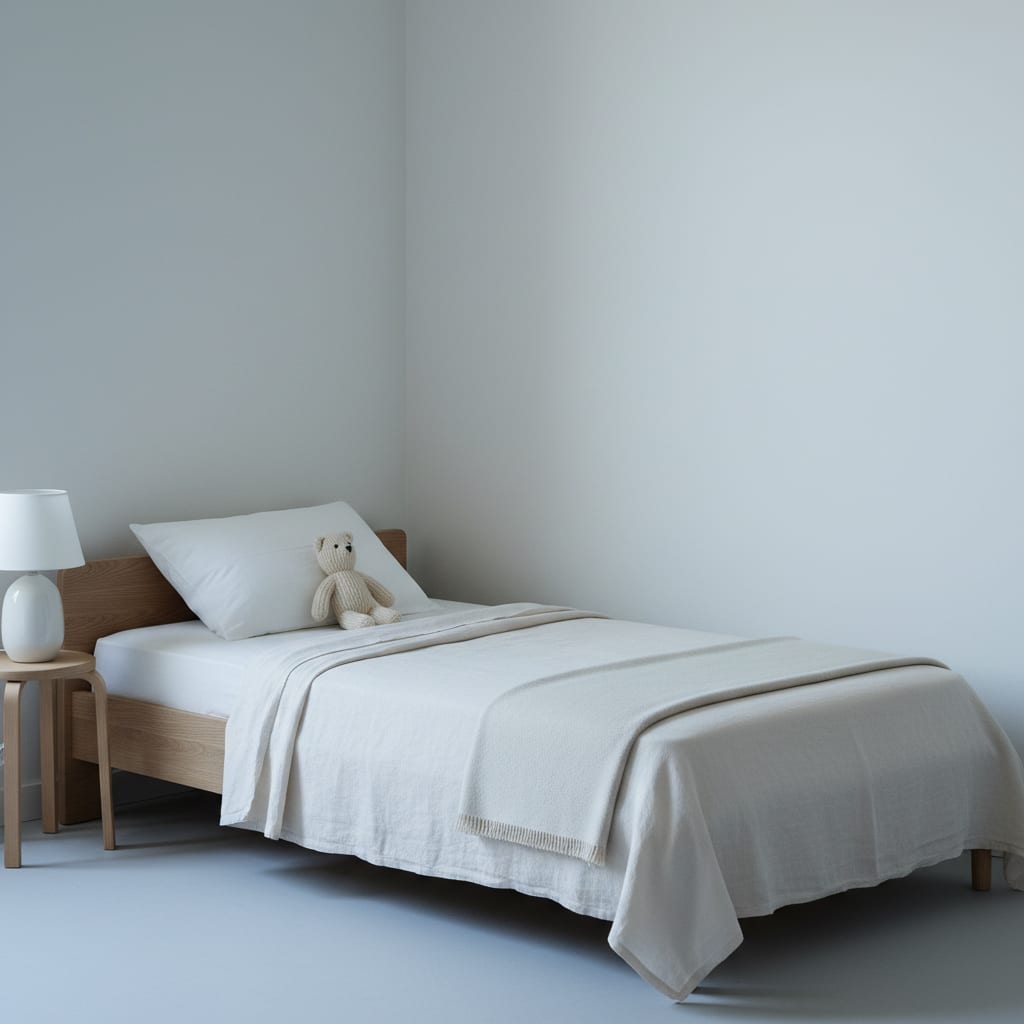
When a foster child arrives with no bedtime routine, do not install your household’s routine on the first night. Keep the first few nights to the floor: a made bed, a warm dim light, you close by, water within reach. Then build one small ritual, the same every night, and add a step only once the last one has stopped being a surprise. Buy almost nothing before they come. Ask the caseworker what their last bedroom was like, and tell the caseworker and the pediatrician what the nights actually look like.
There may be no routine to copy
Most bedtime advice assumes a routine that needs trimming. A child coming into care may never have had one. The Children’s Hospital of Philadelphia lists why children who have lived in foster care may have difficulty sleeping in a new home, and the first two reasons are the whole premise of this page: “They may not have an established consistent sleep schedule” and “They may have slept in a noisy, crowded environment”.
That second line changes what a good first room looks like. A silent bedroom with a closed door is calm to you. To a child used to a television through the wall and three people in the room, it can be the strangest place in the house. CHOP’s advice is to “think about the sleep environment the child was familiar with before he joined your family”, which is an instruction to find out before you improve anything.
Night one is not the night to start
The first night has one job: getting to morning. Show them where you sleep, where the bathroom is, where the light switch is. Leave the light on low if they want it. If they fall asleep on the sofa in their clothes, that is a fine first night.
Karla Adams, who works with foster parents in Missouri, gave AdoptUSKids advice that sounds like the opposite of sleep hygiene and is right for this stretch: “You may have a kiddo who can’t sleep. I tell foster parents to try to have good kids movies on hand for each age group—cartoon on up. If a child can’t sleep, try putting a movie in and sitting on the couch with them.” (AdoptUSKids) Screens before bed are a problem to solve in week three. On night one, someone sitting beside them matters more than the rule.
Build one small ritual, then hold it
The American Academy of Pediatrics’ guidance for foster and adoptive parents on parenting after trauma says to “set up routines for your child (for the day, for meals, for bedtime) so they know what to expect,” and to “give your child a sense of control through simple choices.”
Start with a ritual so small it can’t fail: teeth, the light switched to low, one sentence from you that is always the same (“I’m just down the hall, and I’ll be here in the morning”). Do it in the same order at the same time for a week. Only then add a step, such as a book, and after another week another one. The four-step shape I would eventually aim for is set out in the short version of a bedtime routine.
Put the choices inside the ritual, not around it. Which of two books. Which pajamas. How far open the door stays, and if you want the gap to be the same every night, treat the door as a dial rather than a switch. The order is yours to hold and the small choices are theirs. That is the AAP’s pair of instructions in practice.
And set your expectations by the same page: “Learning to trust again is not likely to happen overnight—or anytime soon.” A ritual that holds for a month without visibly helping is still working.
What the room needs, and what it doesn’t
I spent years in retail selling the “new bedroom” story: themed bedding, a shelf of new toys, a welcome basket. For a placement the urge is stronger, because buying feels like being ready. It mostly isn’t. Every new object is one more stranger in the room.
What the first room actually needs:
- A made bed with plain bedding and one extra blanket folded at the end, so warmth is something they can control.
- A warm, dim light they can reach. A bright white overhead bulb works against sleep. Betteroo’s guide explains why the color of a bulb matters at night, and a lamp at their height means they don’t have to ask.
- An empty surface for what they brought. Clear it before they arrive, so their things have somewhere that is plainly theirs.
- Sound, if they came from noise. If the caseworker says home was loud and your house is silent, a steady fan-type sound fills the gap. A Yogasleep Dohm Classic is the plain worked example: a real fan in a housing, and it sounds the same every night.
What they bring is outside every count on this site. It doesn’t get one-in-one-out, it doesn’t get tidied into a bin, and nothing gets washed without asking first. A blanket that smells of somewhere else may be the most familiar thing in the building, and the reasons a specific object can’t be substituted are the ones in the post on the one toy a child sleeps with. Anything else can be bought on day three, with the child choosing it.
What to ask the caseworker, and what to tell them
Ask what bedtime looked like before, if anyone knows: where they slept, with whom, with the light on or off, the door open or shut, and what they sleep holding. AdoptUSKids notes that when a child has just come into care, the worker “is not going to have answers to many of them for at least 24 or 48 hours.” Ask again once that window has passed. Also ask whether your agency has written rules on sleeping arrangements, and follow them.
Tell them what you see, in writing. A few lines a night: roughly when they fell asleep, whether they woke, whether they seemed frightened, anything unusual. That’s a log to share, not a diagnosis to make. Take the same notes to the child’s pediatrician.
What you should not do is try to treat what you are seeing. The AAP says to “ask for help whenever you have concerns, questions, or are struggling,” and notes that “there are proven therapies to help children and parents adjust to the effects of trauma.” Finding and arranging that help is the job of the child’s social worker and pediatrician. Your job is the bedroom, the ritual and the notes.
If the child is a baby
None of the flexibility above applies to the sleep space of a baby under one, whatever the baby was used to before. The AAP’s parent guide to safe sleep is plain: “Place your baby on their back for all naps & at night,” “Choose a firm, flat sleep surface for sleep,” and “Share a room with your baby, but never share a bed.” The crib holds the baby and a fitted sheet and nothing else. If a baby only settles one particular way, such as rocking or head-rolling, tell the pediatrician. Don’t adjust the sleep space to fit it.
For you
The AAP page has one line worth keeping on the fridge: these emotions “may happen with you, but are not about you.” A child who fights the ritual, wakes three times or won’t let you near at bedtime is reacting to everything that came before your house. It isn’t a verdict on your first week.
FAQ: bedtime for a newly placed foster child
Should I keep the routine they had before? If they had one and it was safe, yes, as far as you can. Familiar beats better. If nobody knows what it was, start from the smallest ritual above instead of guessing.
Can a foster child sleep in my bed if they’re scared? Not a baby, ever. For an older child, check your agency’s rules first, because they apply to you. Sitting beside the bed until they fall asleep gives most of the comfort.
How long until they sleep well? Nobody can give you a number, and the AAP page doesn’t offer one. Look for smaller signs first: the ritual stops being argued over, or they say the sentence before you do.