№ 61
The Unscheduled Saturday: Why the Toddler Nap Finally Happens
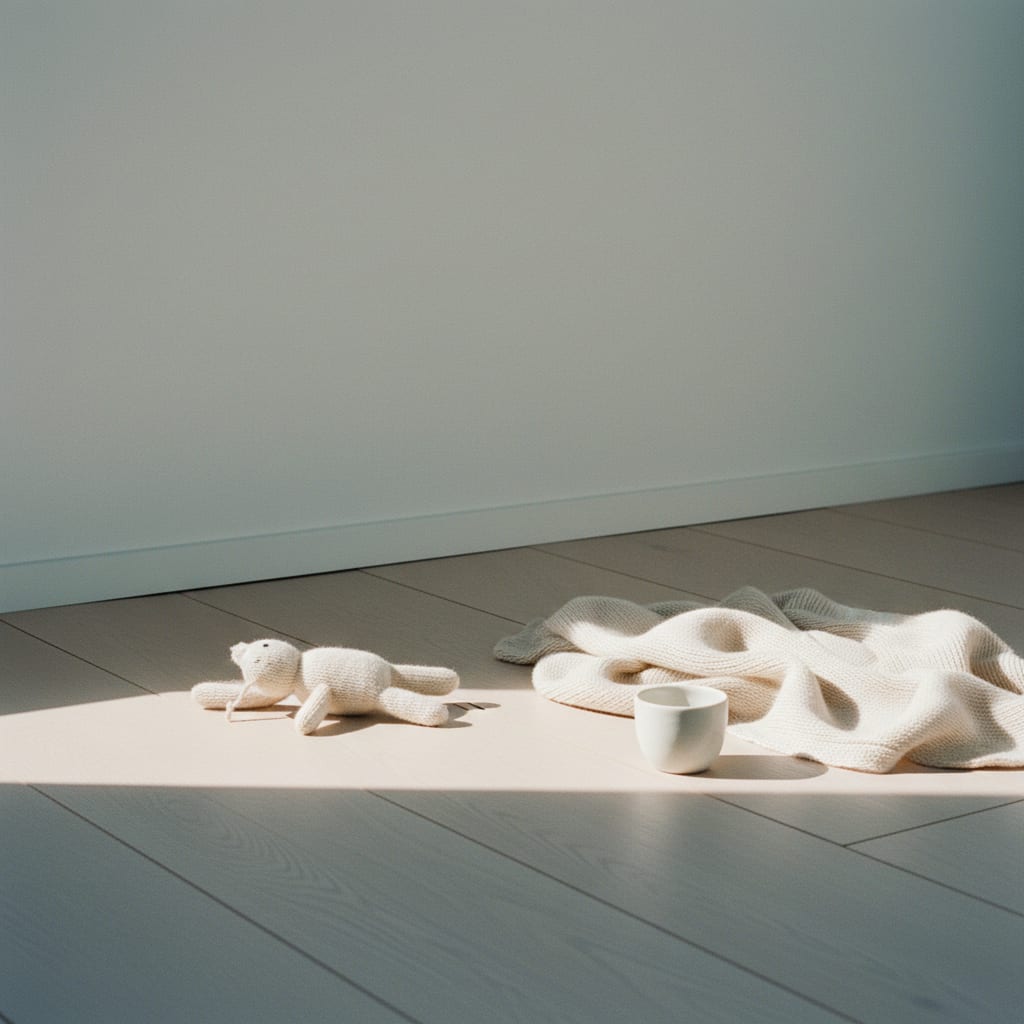
If your toddler naps well all week and falls apart every weekend, the fix is usually less, not better: leave one weekend day with nothing booked in it. No party, no errands, no bag to pack, no car until the nap is over. On that day the nap tends to happen the way it does on a weekday, at its usual time, in its own bed, because nothing is standing in front of it. Our house rule is one plan per weekend and one day with nothing in it at all. It’s an inflow rule, applied to Saturdays.
A weekend is shelf space
I used to plan floor space for a big-box chain, and the first thing you learn is that the floor doesn’t grow. Every new display pushes an old one out, whether anyone decides it or not. A weekend works the same way: two days, and every plan takes a slot.
Nobody fills a Saturday on purpose. It fills one reasonable yes at a time. A birthday party at eleven. The farmers market, because it closes at noon. A swim lesson. A quick grocery stop on the way home. Lunch at the grandparents’, because they asked last week. Each one is a nice thing. Put four of them on one day and the nap has nowhere to go.
Why the nap fails on a full Saturday
A busy Saturday rarely cancels the nap outright. It moves it, shortens it or replaces it.
- The car doze. Twenty minutes in the car seat on the way home takes the edge off a tired toddler, and then the real nap in the crib doesn’t happen. The mechanics are covered in thatsuburbanmomma’s post on the car nap that ruins bedtime.
- The stroller nap. It happens, but it’s short, and it ends when the stroller stops.
- The late nap. The outing runs long, the nap starts at three instead of one, and bedtime slides back to match.
The weekday nap works partly because it’s boring: same time, same place, same lunch before it. The American Academy of Pediatrics says so on its healthy sleep habits page: “Keep to a regular daily routine. The same waking time (both on weekdays and weekends), mealtimes, nap time and play times will help your child feel secure and comfortable, and help with a smooth bedtime.” Note the word weekends. Nemours KidsHealth’s page on naps asks for “regular naptimes that are not too close to bedtime,” and admits that “sticking to a naptime schedule can be a challenge.” On a full Saturday there’s simply no room for it.
The cost lands that evening and the next morning, because the wake-up rarely moves. If you’ve worked bedtime out backwards from the wake-up, as in what time a baby should go to bed, you’ll see why a three o’clock nap pushes everything after it.
A skipped Saturday nap is not a dropped nap
This is the expensive misreading. A toddler skips the nap three Saturdays running, and someone decides the nap is over. But a nap skipped because the day was full says nothing about whether the child still needs it.
Betteroo’s guide to moving from two naps to one is blunt: “One rough day does not mean it is time.” It looks for signs that repeat for two weeks or more. Its companion guide on the end of napping uses mood at bedtime as the real test: cheerful but not tired suggests a child may be ready, crabby suggests they still need it. A child melting down at six after a party isn’t giving you useful information.
KidsHealth says most toddlers “drop down to one nap a day by 18 months,” and that many preschoolers give up the afternoon nap between three and five. If yours is in that window, an empty Saturday is the cleanest test you have. If the nap doesn’t happen even then, that’s real information.
What an empty Saturday holds
Here’s what you don’t do on an unscheduled Saturday. You don’t pack a bag, buckle a car seat four times, or bring snacks, a spare outfit and a toy to keep someone quiet in a waiting room. An empty day is also a day with nothing to carry.
What’s left is the house, the yard, a park you can walk to, and whatever’s already on the shelf. That’s enough. The AAP’s article on the power of play names “tightly structured family and school schedules” among the reasons children play less than they used to. For one- to three-year-olds it suggests “blocks, empty containers, wooden spoons, shape sorters and puzzles,” because “simple and inexpensive objects are some of the best ways to support a child’s creativity and grasp of how the world works.” For older children: “some boredom allows for creativity.”
A shelf of open-ended toys, where the child supplies the game, is made for this kind of day. If the house has no blocks at all, a solid hardwood set like the Melissa & Doug standard unit blocks is the one thing I’d buy for it. Nothing else is needed.
A typical empty Saturday in our house:
| Time | What happens |
|---|---|
| Morning | Outside on foot: the yard, a walk, the park two streets over |
| Late morning | Home, blocks or a puzzle while lunch is made |
| Lunch | At the table, at the weekday time |
| Nap | Usual time, usual bed, usual short routine |
| Afternoon | Whatever comes up, including nothing |
It’s a weekday with the commute taken out.
The weekend rule: one plan, one empty day
These are house rules, not research, for a family with a child who still naps.
- One booked plan per weekend. A party, a lesson or a visit. One.
- It sits on one side of the nap. Morning plans end at home before lunch. Afternoon plans start after the nap.
- The other day stays empty. No plans, no errands, no “quick stop.” Shopping waits for a weekday.
- A new invitation displaces the old one. When a second plan turns up, one of them goes, usually the one that could happen another weekend.
It’s the same count this site runs on December evenings: set a limit, and when something comes in, something leaves.
One honest caution: this isn’t an argument for building every day around the crib. The nap trap is real, and a housebound year has costs of its own, many of them paid in things bought to fill the house. One empty day a week is the opposite of that. The other six still go out.
When the nap still doesn’t happen
Sometimes the day is empty, lunch is on time, and the child still won’t sleep. KidsHealth’s advice is not to fight it, since “you can’t force your child to sleep,” but to “set aside some quiet time” with books or quiet play in their room. It adds that parents “are often surprised by how quickly quiet time can lead to sleep time.” If the nap is genuinely going, it suggests an earlier bedtime.
The AAP page has one more line worth keeping: “Make sure the sleep routines you use can be used anywhere.” A short routine travels, which helps on the Saturday that does have a plan.
An empty Saturday gives the nap room. The nap itself still has to fit the child. Betteroo builds a sleep plan around your own child's age, naps and wake-up time, so you know when the nap should start and whether it is really ending. Take the free sleep quiz →FAQ: weekend naps and unscheduled days
Is it bad to skip my toddler’s nap on weekends? An occasional skipped nap is ordinary. A pattern every weekend is the problem, because the wake-up rarely moves and the lost sleep shows up at bedtime. The AAP advises keeping nap and waking times the same on weekdays and weekends.
Why does my toddler nap on weekdays but not on weekends? Usually because weekends are busier. Car dozes, stroller naps and long outings move or shorten the nap. Try one empty day and see whether it comes back.
How many activities should a toddler do on a weekend? There’s no official number. Our house rule is one booked plan per weekend, before or after the nap, and one day with nothing booked at all.
Does a skipped weekend nap mean my child is ready to drop it? Not on its own. Judge readiness on ordinary days at home, over a couple of weeks, and watch your child’s mood at bedtime.