1 timer.
Wind-Up Timer for Bedtime: A Screen-Free End to Play
A wind-up kitchen timer gives the evening's play a visible end without a phone in your hand. How to use one timer, what to say, and what to do when it rings.
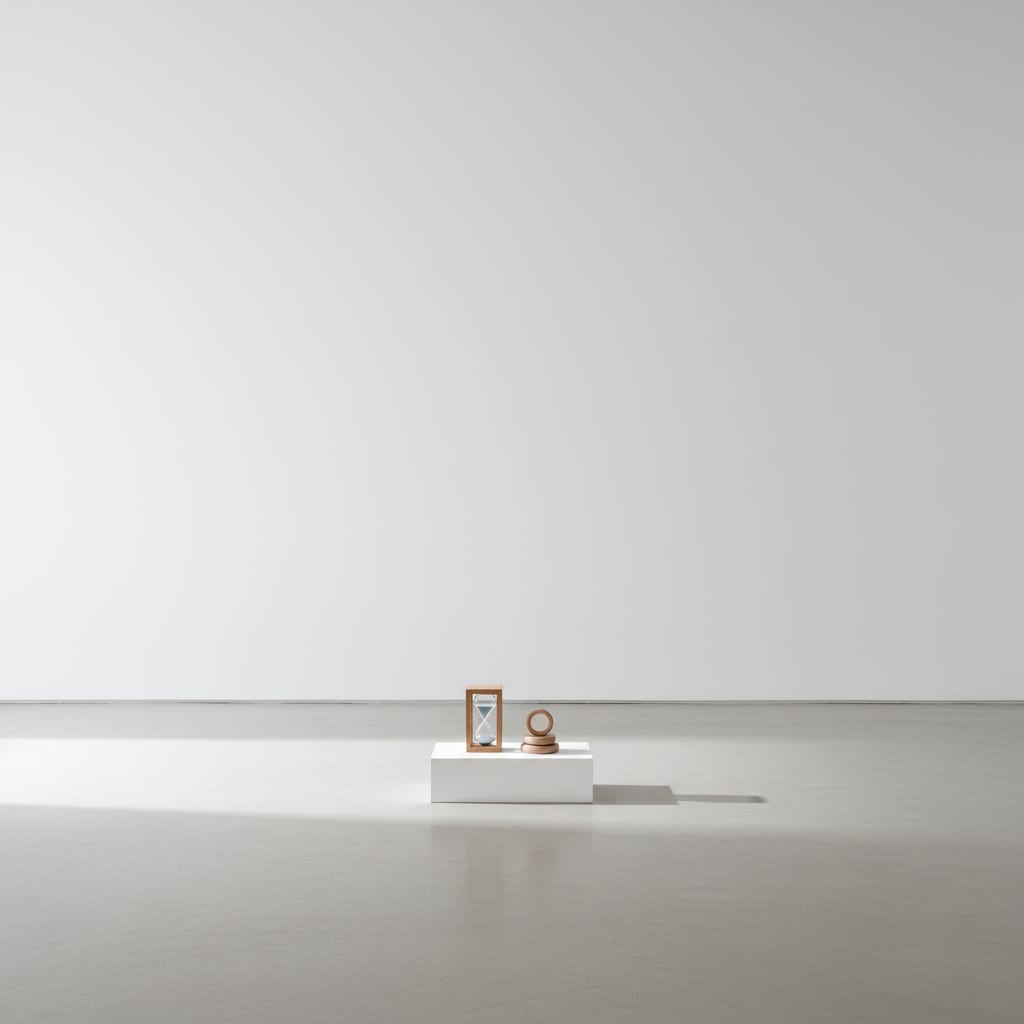
A wind-up kitchen timer is one of the simplest ways to end the evening’s play. Set it where your child can see it, say once how long is left, and let the ring be the thing that ends the game, not you. It works better than a phone or tablet countdown because it does one job: there’s no screen to look at, no app to open, and nothing to scroll once it goes off. Use one timer, keep it in one place, and set it for the same stretch every night. It won’t make a child who isn’t tired go to sleep, but it does take the argument out of the last ten minutes before the bath.
Why a phone is the wrong timer for the end of play
When the countdown lives on a phone, the phone comes out at the exact moment the evening is supposed to be winding down. The child sees the screen and asks to watch something “just while it counts.” When it rings, it’s still in your hand, and so is everything else on it. A timer that sits inside a screen invites the screen into the last part of the day.
The American Academy of Pediatrics’ healthy sleep habits page is direct about screens and sleep. It recommends “keeping all screens—TVs, computers, laptops, tablets and phones out of children’s bedrooms, especially at night,” and says: “To prevent sleep disruption, turn off all screens at least 60 minutes/1 hour before bedtime.” If the hour before bed is meant to be screen-free, the tool that ends play shouldn’t be a screen either.
A wind-up timer has none of that. You turn the dial, it ticks, it rings. In retail we’d have called it a single-purpose fixture: it does one thing, and nobody wanders off to do something else with it.
What a warning and a timer actually do
Young children find it hard to stop something they enjoy and start something they don’t. A timer doesn’t change that, but it makes the change predictable.
Nationwide Children’s Hospital’s preventive strategies handout lists a timer under “You Will Need” and gives the method plainly: “Use a timer and verbal warnings for the length of each activity. This helps your child transition from activities they like to non-preferred activities.” It suggests setting the timer at the start, so your child knows how long the activity will last, and saying something like “One more minute” before the end.
Mount Sinai’s parenting team makes the same point in The Work of Transitions. It notes that young children’s skills for switching focus “are still immature,” which is why so many families struggle “moving their children from play to dinner, or from TV to getting out the door.” Its first tip is to “offer a warning” with a timer, and it adds that “sand timers work best” for young children. Its next idea, a simple bedtime chart, is the job of a short visual bedtime routine; the timer comes first and ends the play so the routine can start.
Neither source says a timer fixes sleep, and this post doesn’t either. What it does is end play at the same point every night, without a debate.
The one-timer evening
Here is the whole system. It has three moments, and the timer does most of the talking.
| When | What you say | What the timer does |
|---|---|---|
| Play starts after dinner | “You have until the timer rings. Then it’s bath.” | Set once, in plain sight |
| A few minutes before it rings | “Nearly done. Pick the last thing to finish.” | Keeps ticking; nobody touches it |
| It rings | “That’s the timer. Toys in the basket, then bath.” | Goes back in its place |
A few house rules keep it working:
- Set it once and leave it. If you add “five more minutes” every night, your child learns that the ring is the start of a negotiation. Pick a length that works and keep it the same.
- The timer ends play. You don’t. When it rings, point to it rather than announcing the end yourself. That’s the whole reason to have it.
- One timer, one spot. Keep it on the same high counter or windowsill every evening, where your child can see it but not reach it. It isn’t a toy.
- Tidy-up comes after the ring, not before. Toys go into the basket as the first step of the routine, so the routine starts on the same task every night. If you’ve cut it down to four bedtime steps, the timer comes just before step one.
- Change the lights when it rings. The end of play is a good moment to turn off the big overhead light and switch to one lamp for the last hour.
Choosing the one timer
You probably don’t need to buy anything. If there’s a wind-up timer in the kitchen drawer, use that one.
If you do buy one, buy one timer, not a set. A plain mechanical kitchen timer like the Taylor 60-minute mechanical timer is a reasonable example: a dial you wind by hand, no battery, and a ring when it reaches zero. It also does its everyday kitchen job, so it earns its place in the house.
For a toddler who can’t read a dial yet, a sand timer is easier to follow, because the sand that’s left shows the time that’s left. A single large one, such as the hand2mind jumbo 5-minute sand timer, works as the “nearly done” warning: turn it over at the five-minute point, and play ends when the top is empty.
Pick one or the other. Three timers doing one job is how a simple fix turns into a collection.
When the timer rings and play still doesn’t end
Some nights the ring will be met with tears. That’s normal, especially in the first week, and it isn’t a sign the method failed. Follow through calmly: the timer has rung, the toys go in the basket, and the bath starts. Don’t reset it.
If the protest happens every night, look at the evening before blaming the timer.
- The play is starting too late. If dinner runs long and there are ten minutes of play before the bath, the ring always cuts something off. Betteroo’s evening plan for working backward from the time you serve dinner is a practical way to find more room before the routine starts.
- The stalling moves to after lights-out. A timer ends play. It can’t end a string of requests from bed. Betteroo’s guide to the toddler who keeps finding one more thing to ask for covers that part of the night.
- Your child isn’t tired yet. No routine makes an under-tired child sleepy. If bedtime itself is too early for their naps and wake-up time, that’s a schedule question, not a timer question.
FAQ: using a timer to end play before bed
Is a kitchen timer better than a phone timer for kids? For the end of the evening, usually yes. It does one job, and there’s no screen to ask for. The AAP recommends turning all screens off at least an hour before bedtime, so a timer that isn’t a screen fits that rule.
How long should the timer be set for before bedtime? There’s no set number. Choose a play stretch that fits your evening and keep it the same every night. Many families add a short warning a few minutes before the end.
What age can a child understand a timer? Toddlers can follow a sand timer before they understand a dial, because they can watch the sand run out. Older preschoolers can often follow a wind-up dial once you’ve shown them where it starts and stops.
What if my child tries to turn the timer back? Keep it out of reach, in the same place every night. The timer belongs to the adults, the same way the last goodnight does.
More in Minimalist Family