№ 31
Can a Kid Sleep in a Room With No Window?
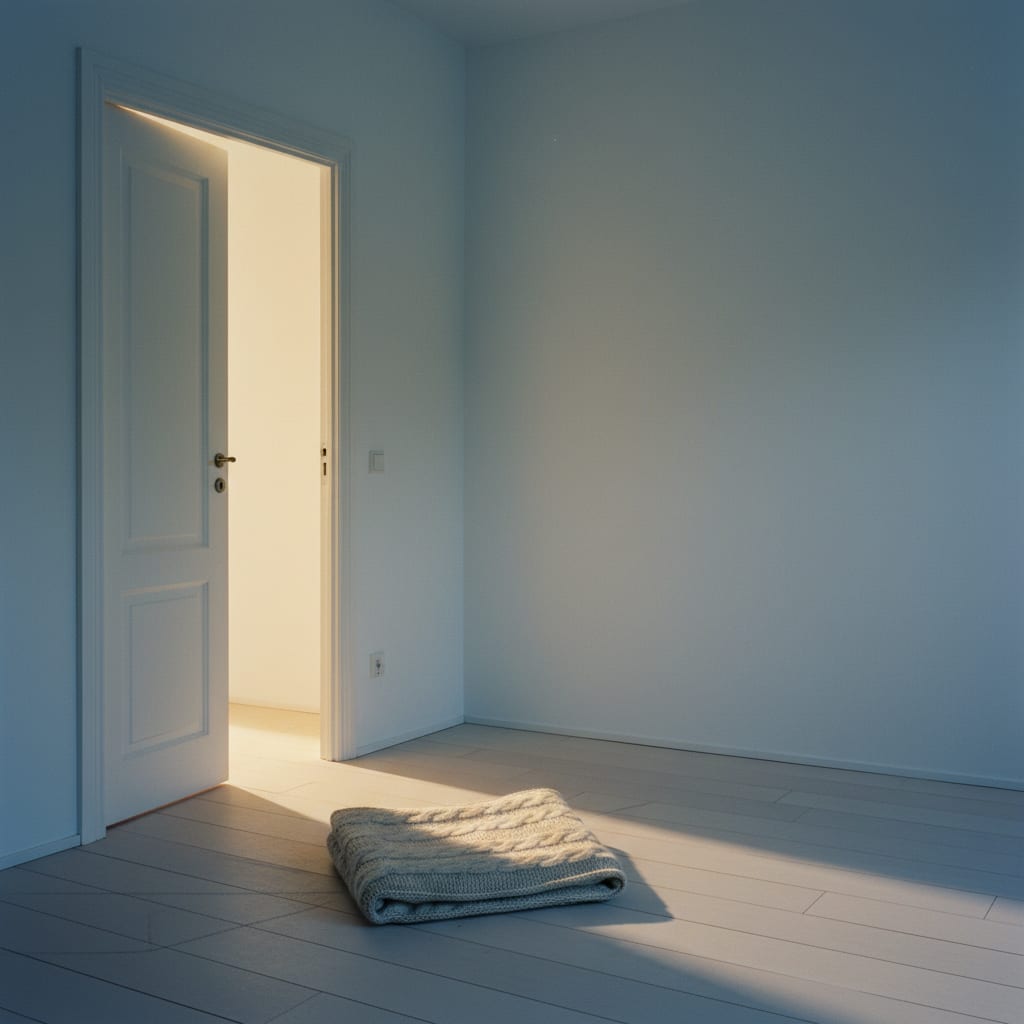
Children sleep perfectly well without a window — the dark is not the problem. The problems are legal and physical. In most of the United States the model residential code requires an emergency escape and rescue opening in every sleeping room, which usually means a window; and an internal room, with one door and no glass, runs warmer and stiller than the rest of the house. So there are three questions worth answering, in this order: is it a legal bedroom where you live, how does air move through it, and what temperature does it actually hold?
Is it a legal bedroom where you live?
This part catches people out, because it has nothing to do with comfort and everything to do with getting out.
The International Residential Code — the model code most US jurisdictions adopt in some form — settles it in one sentence in Section R310: “Basements, habitable attics and every sleeping room shall have not less than one operable emergency escape and rescue opening.” It has to open from inside without keys or tools, lead to a yard or public way, and clear 5.7 square feet — at least 24 inches high, 20 wide, its bottom no higher than 44 inches off the floor. A decorative slit window doesn’t count.
Light and ventilation, by contrast, can be met artificially. Section R303 asks for glazing of at least 8 percent of the floor area and openable area of at least 4 percent, then allows both to be substituted — mechanical ventilation producing 0.35 air changes per hour, plus artificial light — where R310 doesn’t require an opening. That distinction is the whole story: the daylight requirement bends, the way-out requirement doesn’t.
Codes are adopted and amended locally, though, and multi-family buildings follow the commercial code, where a sprinklered apartment can have a legal windowless bedroom that a house cannot. It reaches past safety too: an unpermitted room isn’t a bedroom on an appraisal or an insurance claim. If you’re converting a den, box room or basement, make the free call to your building department before the bed goes in.
Whatever the room’s status, put a working smoke alarm inside it. The NFPA’s standard guidance is an alarm inside every sleeping room, one outside each sleeping area, and one on every level. A room with a single exit is no place to be casual about it.
Air, and the thing that actually moves it
Assume the code question is settled. The day-to-day issue is air exchange, and it’s simpler than the internet makes it.
Air moves because something pushes it: a return vent, a supply register, a door gap. A room with one door and no window has one path, and closing the door closes most of it. So the first fix is free — undercut the door, or leave it open. A decent gap underneath plus a supply register in the room will exchange air steadily. A door that seals to the carpet, in a room with no register, will not, and that’s the case worth actually fixing.
Where the door has to stay shut — a light sleeper, a sibling in the hall — a small circulator fan aimed at the doorway keeps air moving and evens the temperature at the same time. This is the one purchase I’d make for a windowless room, and I’d make it once: the Vornado 460 is the plain, quiet, three-speed kind that moves air across a small room rather than blowing at a face. Put it high or across the room, on the lowest speed that works, cord out of reach.
Temperature: the internal room runs hot
An internal room has no glass losing heat overnight, so it holds whatever the day put into it, plus one sleeping child. Families notice it as a room that’s fine at bedtime and stuffy at 2am.
Leave a plain room thermometer on a low shelf for a week, so you’re managing a number rather than a feeling. Betteroo’s guide to the temperature range a bedroom should sit in overnight covers the figures and how to dress a child for the room you have. After that the levers are ordinary: the door, the fan, the register damper, and the one most people skip — one layer fewer on the bed than the rest of the house gets.
The light cue you lose, and the one you keep
A windowless room is naturally dark, which is a real advantage at 5am in June and for any nap in daylight. Parents of children in east-facing rooms spend money buying this condition; you have it for nothing.
What you lose is the morning signal. A child in an internal room can’t tell 5:40 from 8:15. Some sleep gloriously late; others wake at the usual time and call out, because there’s no evidence morning has happened. Both are normal, and the second is why a dim, warm lamp on a timer earns its place here in a way it doesn’t elsewhere: it restores the one cue the room can’t supply. Same logic as everything else in minimalism with kids — replace one function, not the whole category.
And be clear about what darkness does. It helps. It doesn’t create sleep that isn’t developmentally there, which is the honest picture in what normal child sleep actually looks like.
What gets sold for a room with no window
A category needs a worried customer with a specific phrase, and I spent years as a retail buyer deciding which objects deserved shelf space. “Windowless bedroom” is a very good phrase, and the aisle grown against it aims at the wrong problem.
- Blackout blinds and curtains — the most common purchase for a room that has no window to cover. Where there is glass the darkening question is real, and Betteroo’s rundown of which darkening options actually earn their money is the version to read.
- Fake window panels — sold as daylight, deliver a lit picture. Unrelated to air, temperature or egress.
- Air purifiers and air-quality monitors — right tools for allergens or smoke, wrong ones for stuffiness. A purifier filters the air already in the room; neither exchanges any of it.
- Dehumidifiers — occasionally correct, since a basement room genuinely can be damp. Measure with a cheap hygrometer for a fortnight first.
The room needs a way out, a path for air, a temperature you’ve measured, a light you control and an alarm on the ceiling. Four of those five are free — the usual shape of these things, and the same reason a short bedtime routine beats most of what’s sold to improve one. Setting the room up from scratch, the rest of the list is in what a kid’s bedroom actually needs.
FAQ: sleeping in a room with no window
Is it illegal for a child to sleep in a room without a window?
It depends where you live and what kind of building it is. Under the IRC, which most US jurisdictions adopt in some form, every sleeping room in a house needs an operable emergency escape and rescue opening — in practice a window or a door to outside. Multi-family buildings follow the commercial code, which allows them in fully sprinklered buildings. Local amendments vary, so ask your building department rather than a forum.
Do windowless bedrooms have enough air?
Generally yes, provided air can move. A room on a working heating and cooling system, with a supply register and a gap under the door, exchanges air continuously. The cases worth fixing are a door that seals tight to the floor and a converted room with no register at all — both cheap to solve, and neither improved by a purifier.
Do kids sleep better in a completely dark room?
Darkness helps most children settle, particularly with early-morning waking and daytime naps, so an internal room starts with an advantage. What it can’t do is manufacture sleep a child isn’t developmentally ready for. If the room is dark, quiet and a sensible temperature and nights are still hard, the room isn’t the variable.
How do I stop a windowless room getting stuffy at night?
Leave the door open where you can; where you can’t, run a quiet circulator fan on low aimed at the doorway rather than the bed. Check the supply register is open and unblocked, and measure the room’s overnight temperature for a week before changing anything else — most stuffiness turns out to be a heat problem.